

Wisdom Teeth Removal
FOR ALL TREATMENT PRICING, WE FOLLOW THE PROVINCIAL DENTAL FEE GUIDE THAT IS USED BY ALL DENTAL PRACTICES IN ONTARIO.
Wisdom teeth are the last molars to come in, usually somewhere between the ages of 17 and 25, although they can arrive earlier or later. For some people they come in straight, have enough room, and can be kept clean like any other tooth. For many others they come in at an angle, only partly break through the gum, or stay trapped under the gum and bone. That is when they tend to cause trouble.
Oral Surgery at KWC Dental
When wisdom teeth removal is considered
At KWC Dental, we assess and remove wisdom teeth for patients across Waterloo, Cambridge and Kitchener. This page explains how the decision to remove a wisdom tooth is usually made, what the appointment involves, and what recovery often looks like day by day.
Not every wisdom tooth needs to come out. The decision depends on how the tooth is positioned, whether it is causing problems now, and how likely it is to cause problems later. Your dentist will look at your X-rays, examine your mouth and talk through what they see before recommending anything.
Removal is commonly discussed when:
- The tooth is impacted. An impacted wisdom tooth is blocked from coming in fully, often because it is angled toward the tooth in front of it or lying sideways in the jaw. Wisdom teeth are most often a problem when they come in horizontally and press against neighbouring teeth.
- The gum around a partly erupted tooth keeps getting sore or infected. When a tooth only partly breaks through, a flap of gum can trap food and bacteria. Repeated swelling, tenderness or a bad taste in that area is a common reason patients come in.
- The tooth is hard to keep clean. Because of where they sit at the very back of the mouth, wisdom teeth can act as food traps. That raises the risk of decay in the wisdom tooth and in the molar next to it.
- The neighbouring tooth is affected. A wisdom tooth pushing against the second molar can, in some cases, contribute to decay or gum problems on that tooth.
- An X-ray shows a change around the tooth. Occasionally an X-ray shows a cyst or other change around an impacted tooth. Your dentist will advise whether it needs attention.
Some patients have no symptoms and hear about a problem at a routine checkup. Others come in with pain. Either way, the first step is an assessment.
Signs worth booking an assessment for
- Pain, pressure or tenderness at the back of the jaw
- Swollen or bleeding gums behind your last molar
- A bad taste or smell that keeps coming back from one area
If you have swelling that is spreading into your face or neck, a fever, or any difficulty swallowing or breathing, that is not a wait and see situation. See our Emergency Dentistry page, and if breathing or swallowing is affected, go to the nearest hospital emergency department or call 911.
Assessment and X-rays
Every wisdom tooth plan starts with a proper look at what is under the gum.
The panoramic X-ray. For wisdom tooth surgery, we take a panoramic X-ray, which captures an image of the entire mouth in one view: the upper and lower jaws, the teeth, the sinuses and the surrounding hard tissues. It shows whether the wisdom teeth are present, what stage of eruption they are at, which way they are angled, and whether they are affecting the teeth next to them.
Your health history. Bring a list of any medications you take and let us know about any medical conditions. Some conditions and medications affect how surgery and sedation are planned, and in some cases a medical consult with your physician may be requested before treatment.
The conversation. Your dentist will explain what the X-ray shows, whether removal is recommended, whether it is likely to be simple or surgical, and what comfort options are available. If removal is not needed now, your dentist may suggest watching the teeth at your regular checkups instead. If your situation calls for a different approach, your dentist will talk it through with you.
The procedure
Wisdom teeth removal is a surgical procedure. How involved it is depends on the tooth.
Simple removal. A wisdom tooth that has fully come through the gum can often be removed like any other extraction.
Surgical removal. A tooth that is still under the gum or partly covered by bone usually needs a little more work. After the area is numbed, a small opening is often made in the gum, and sometimes a small amount of bone is removed so the tooth can be reached. In some cases the tooth is removed in sections. The area is then cleaned and, where needed, closed with stitches. Your dentist will explain what applies to your tooth.
On the day.
- You will be numbed with local anaesthetic before anything begins, so most patients feel pressure rather than sharp pain. If you feel discomfort, tell us and we will stop and adjust.
- Some patients have all their wisdom teeth removed in one appointment. Others have them done in two visits. Your dentist will recommend what suits your situation.
- You will leave with gauze in place and aftercare instructions.
If sedation is part of your plan, your dentist will give you instructions before your appointment. These may include guidance on eating and drinking and arranging for someone to take you home. Follow the instructions you are given.
Comfort and sedation options
Removal of wisdom teeth often involves sedation, and many patients feel nervous about it. That is normal and worth raising at your assessment.
Sedation options, including oral sedation and nitrous oxide, are available. Ask which is suitable for you. Which option is appropriate depends on your health history, the medications you take, the complexity of the removal and how anxious you feel. Sedation may or may not be suitable if you have certain health conditions, and a medical consult with your physician may be requested.
At your assessment we will explain what each option involves, what you need to arrange beforehand, and what to expect afterward.
You can read more about how we approach dental anxiety on our Oral Surgery and Sedation Dentistry page.
Recovery, day by day
Everyone heals at a different pace, and lower impacted teeth usually take longer. This timeline is a general guide only. The aftercare instructions from your dentist always come first.
The day of surgery
- Keep firm, steady pressure on the gauze by biting down. Change it as instructed. Light oozing for the rest of the day is normal.
- Rest with your head raised, and use a wrapped cold pack on your cheek, on and off, to limit swelling.
- Do not rinse, spit forcefully or drink through a straw. These can loosen the blood clot that protects the socket.
- Do not smoke or vape.
- Stick to cool, soft foods once the numbness has worn off, such as yogurt, applesauce and pudding.
- Take pain relief as directed by your dentist. Do not exceed the recommended dose.
Days 1 to 2
- Swelling and stiffness often increase over the first two days. This is expected.
- From the day after surgery, your dentist may advise gentle warm salt water rinses after meals, letting the water fall out of your mouth rather than spitting.
- Brush your other teeth as normal, being gentle near the surgical sites.
Days 3 to 4
- Swelling usually peaks around this point and then starts to settle. Some bruising on the cheek or jaw can appear and fade.
- If pain is getting worse instead of better around day 2 to 4, call the clinic. See the section on dry socket below.
Days 5 to 7
- Many patients are back to normal routines, eating more normally and avoiding the surgical side.
- If you had stitches, they may dissolve on their own or need to be removed. Your dentist will tell you whether a follow up visit is needed.
Week 2 and beyond
The gum continues to close over the sockets, and the bone underneath takes longer to fill in, which is normal. If you are given a syringe to rinse food out of the lower sockets, use it as instructed.
Call the clinic if you notice
- Bleeding that does not slow after steady pressure
- Pain that gets worse after day 2 or 3 instead of better
- Swelling that keeps increasing after day 3
- Fever, pus, or a bad taste that does not go away
- Numbness of the lip, chin or tongue that has not worn off by the next day
If swelling affects your breathing or swallowing, go to the nearest hospital emergency department or call 911.
Dry socket: what it is and how to lower the risk
After a tooth is removed, a blood clot forms in the socket. That clot protects the bone and nerve endings underneath while the area heals. A dry socket happens when the clot is lost or dissolves too early, leaving the bone exposed.
What it feels like. A dry socket typically shows up two to four days after an extraction as a throbbing pain that gets worse rather than better, sometimes spreading toward the ear. You may notice a bad taste or smell, or see an empty looking socket. It is more common after lower wisdom teeth are removed.
How to lower your risk.
- Do not smoke or vape for as long as your dentist recommends after surgery. Smoking is a common contributor to dry socket.
- Avoid straws, spitting and forceful rinsing for the first 24 hours.
- Avoid very hot drinks and hard, crunchy or chewy foods while the socket is healing.
- Follow all the aftercare instructions you are given.
If you think you have one, call the clinic. A dry socket is treatable. Your dentist can clean the area and may place a soothing dressing, which often eases the pain.
Cost factors and insurance
We follow the provincial dental fee guide, and your dentist will give you an estimate after your assessment.
What affects the cost
- How many teeth are being removed
- Whether each tooth has come through the gum or is impacted in gum or bone
- How complex each removal is
- Whether sedation is used
Insurance. We accept CDCP and all private insurance plans, and we are happy to bill your insurance provider directly on your behalf. Patients are ultimately responsible for understanding their coverage before beginning treatment, but we can assist by submitting estimates and direct billing when available.
Students. If you are a student and have not opted out of your school’s dental insurance plan, you are most likely eligible for coverage. The University of Waterloo plan lists extraction of impacted teeth and oral surgery, the Wilfrid Laurier plan lists extractions and anaesthesia, and the Conestoga College plan lists fillings and extractions. Our Waterloo clinic is near both universities and easy to reach by ION or bus.
Payment plans. KWC Dental is paired with Dentalcard, which gives you a payment plan option for any of our treatments. Ask us about it, or see our Financing and Insurance page.
Find us
KWC Dental has two clinics serving patients across Waterloo, Cambridge and Kitchener.
KWC Bridgeport Weber Dental
Unit 10, 70 Bridgeport Rd E, Waterloo, ON N2J 2J9
Phone: 519-885-7272
Our Waterloo clinic
KWC Franklin Dental
Unit 10, 800 Franklin Blvd, Cambridge, ON N1R 7Z1
Phone: 519-624-8880
Our Cambridge clinic
Coming from Kitchener? Patients from Kitchener are served by our Bridgeport Weber clinic in Waterloo.
Dental care for Kitchener patients
Related treatments
- Oral Surgery and Sedation Dentistry: extractions, bone grafting and sedation for dental anxiety
- Emergency Dentistry: what to do about sudden pain, swelling or a broken tooth
- General Dentistry: checkups, X-rays and the routine care that catches wisdom tooth problems early
- Dental Implants: replacing a tooth that has to come out
- Financing and Insurance: CDCP, direct billing, student plans and payment options
Request an appointment
Wondering whether your wisdom teeth need to come out? Choose your clinic on our request form and tell us when suits you. The office will call you back to confirm a time. If you would rather speak to someone, call Bridgeport Weber at 519-885-7272 or Franklin at 519-624-8880.
Frequently Asked Questions
Do all wisdom teeth need to be removed?
No. Wisdom teeth that have come in fully, are positioned well and can be kept clean may not need to come out. Removal is usually considered when a tooth is impacted, keeps getting infected, is hard to keep clean or is affecting the tooth next to it. Your dentist will recommend what makes sense after reviewing your X-rays.
Will I be awake during wisdom teeth removal?
Every procedure starts with local anaesthetic to numb the area. Sedation options, including oral sedation and nitrous oxide, are available. Ask which is suitable for you, since it depends on your health history and the complexity of the removal.
Does wisdom teeth removal hurt?
The area is numbed before treatment begins, so most patients feel pressure rather than sharp pain during the procedure. Some soreness and swelling afterward is normal and usually improves over the first several days. Your dentist will explain how to manage discomfort during recovery.
How long does recovery take after wisdom teeth removal?
Many people feel noticeably better within three to four days and return to most normal routines within about a week. Recovery after impacted lower teeth usually takes longer than after simple upper removals. The gum continues to heal over the following weeks. Your dentist will advise on your own recovery.
What is dry socket and how can I avoid it?
Dry socket happens when the protective blood clot in the socket is lost too early. It typically shows up two to four days after an extraction as worsening, throbbing pain. To lower your risk, avoid smoking, vaping, straws, spitting and forceful rinsing in the first days after surgery, and follow your aftercare instructions. If you think you have one, call the clinic.
How much does wisdom teeth removal cost?
The cost depends on how many teeth are removed, whether they are impacted, how complex each removal is and whether sedation is used. We follow the provincial dental fee guide, accept CDCP and all private insurance plans, and can assist by submitting an estimate to your insurer before treatment.
Meet your dentists
Meet Our Dentists
Dr. Samuel Samra, Dr. Ayman Samra, Dr. Azehar Raouf and Dr. Aliki Divaris care for patients at our clinics in Waterloo and Cambridge.
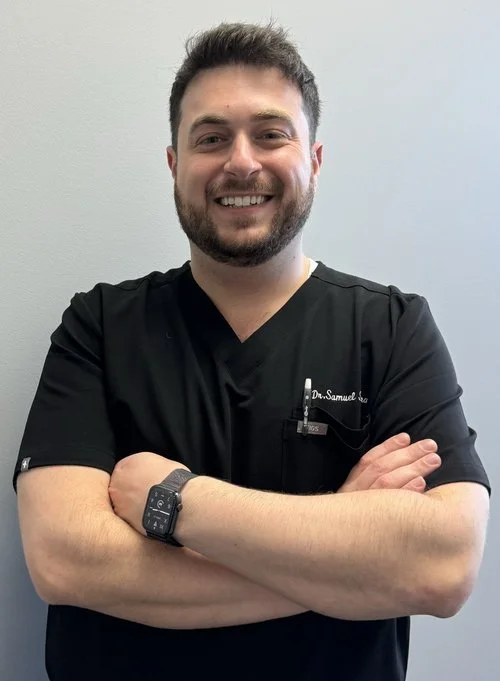
Dr. Samuel Samra
D.D.S.
Dr. Samuel Samra
D.D.S.
Meet Dr. Samuel Samra, one of KWC Dental's most beloved team members. Dr. Samuel Samra brings a wealth of knowledge, skill, and a passion for delivering exceptional dental care. After graduating from the prestigious NYU College of Dentistry, he has garnered dual board certification in both the United States and Canada, exemplifying his commitment to excellence.
Affectionately known as Dr. Sam, he possesses a natural ability to connect with his patients and create a warm, welcoming environment. His patients always leave the office not only with healthier teeth, but also with radiant, laughing smiles.
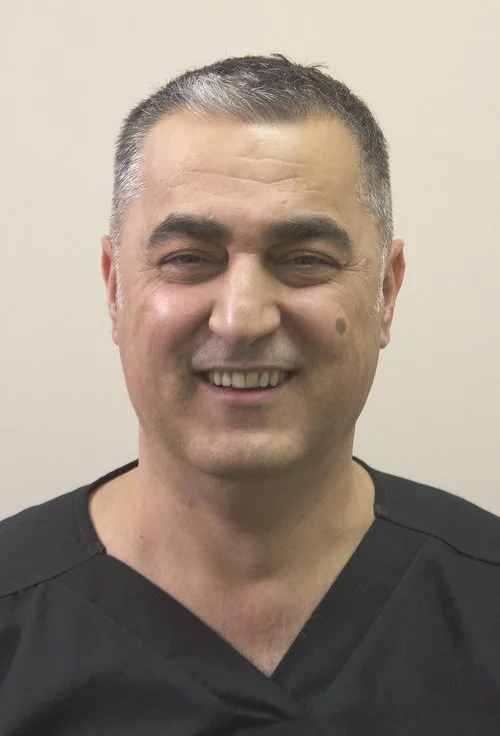
Dr. Ayman Samra
D.D.S.
Dr. Ayman Samra
D.D.S.
Dr. Samra obtained his board certification from the University of Toronto in 1997, and is a Waterloo based dentist. Having opened his first practice in the Bridgeport Weber plaza in 2001, he has since expanded to a second location in Cambridge.
Dr. Samra has over 22 years of experience in general dentistry and oral surgery. Although he is proficient in all areas of dentistry, he enjoys and excels in implant dentistry, prosthetics, endodontics, and oral surgery.

Dr. Aliki Divaris
D.D.S.
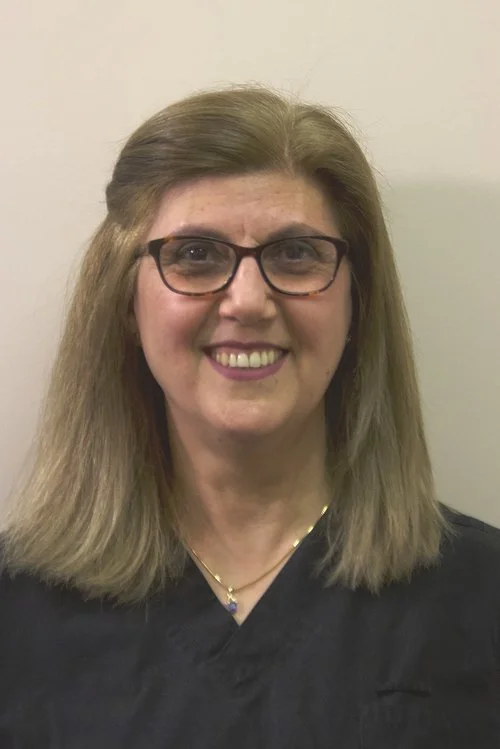
Dr. Azehar Raouf
D.D.S.
Dr. Azehar Raouf
D.D.S.
Dr. Azehar Raouf has been an associate dentist at our clinics since 2014. With over 19 years of experience practicing dentistry in Canada and internationally, Dr. Raouf is a skilled professional. After receiving her degree at the University of Western Ontario, she obtained a Master's degree specializing in biomaterial and implant material.
Dr. Raouf is especially interested in restorative and pediatric dentistry, prosthodontics, and oral surgery. She is passionate about providing the best care to her patients and making their oral health a priority.
Dental Care Across KWC
Wisdom teeth removal AT OUR 2 CONVENIENT CLINIC LOCATIONS
KWC Dental has two active clinic locations serving patients across the Kitchener-Waterloo-Cambridge region.
70 Bridgeport Road E, Unit 10 Waterloo, ON N2J 2J9
Call (519) 885-7272
KWC Bridgeport Weber Dental
Cambridge, ON N1R 7Z1